Original: $39.45
-65%$39.45
$13.81The Story
by Michael Smalley
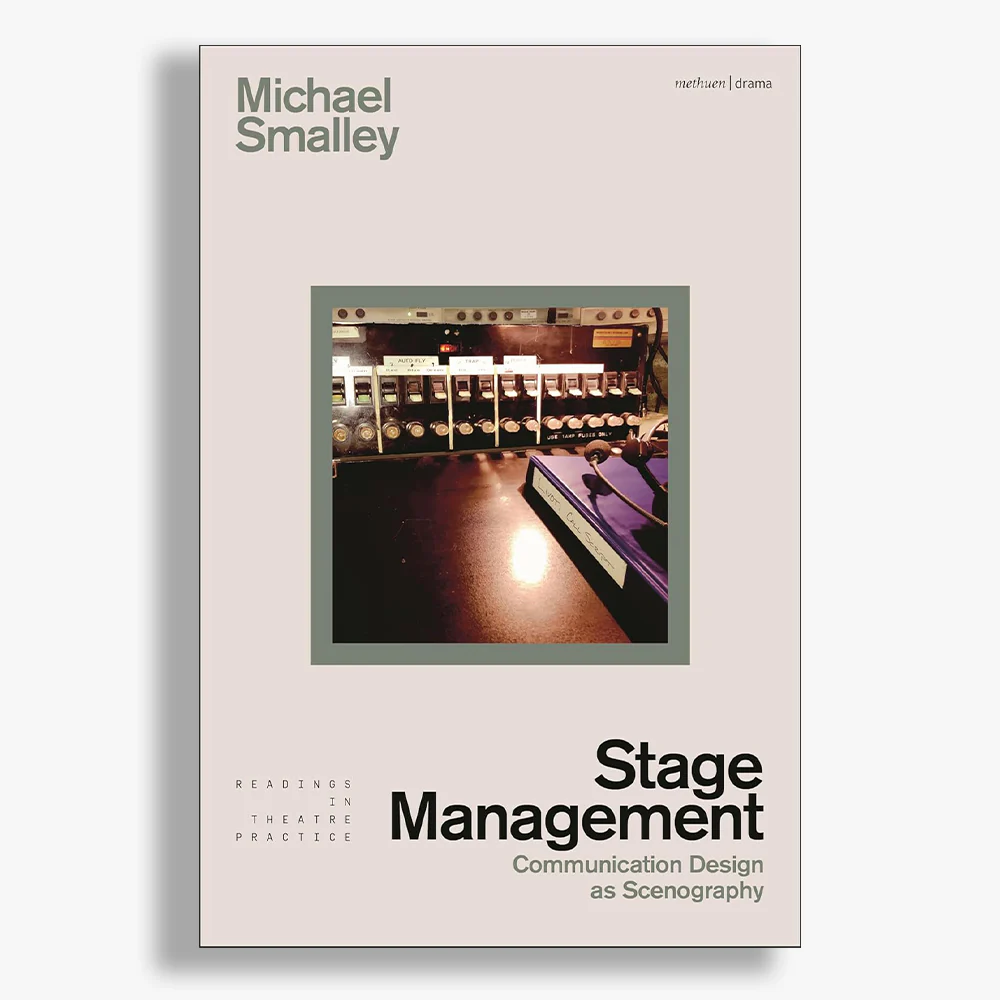
Drawing on interview material from more than 20 leading stage managers from the UK, USA and Australia, this book situates the contemporary practice of stage management within its historical and social contexts. Questioning the notions of the invisible stage manager and a linear production process, it argues for a broader conception of stage management lying at the intersections of administration, management and artistry.
Michael Smalley places stage management practice within key theories drawn from the diverse fields of performance studies, semiotics, phenomenology, distributed cognition, management and scenography. By comparing stage management practice with other technical theatre disciplines, this volume champions the creative agency of stage management. Instead of prescriptive templates and processes, it offers a detailed account of the properties of communication which stage managers manipulate and the objectives they set out to achieve as a guide for decision making. While it considers the different approaches necessitated by productions from different cultures, genres, scales, and so on, it offers a view of stage management which is not bound by these differences.
Description
by Michael Smalley
Drawing on interview material from more than 20 leading stage managers from the UK, USA and Australia, this book situates the contemporary practice of stage management within its historical and social contexts. Questioning the notions of the invisible stage manager and a linear production process, it argues for a broader conception of stage management lying at the intersections of administration, management and artistry.
Michael Smalley places stage management practice within key theories drawn from the diverse fields of performance studies, semiotics, phenomenology, distributed cognition, management and scenography. By comparing stage management practice with other technical theatre disciplines, this volume champions the creative agency of stage management. Instead of prescriptive templates and processes, it offers a detailed account of the properties of communication which stage managers manipulate and the objectives they set out to achieve as a guide for decision making. While it considers the different approaches necessitated by productions from different cultures, genres, scales, and so on, it offers a view of stage management which is not bound by these differences.